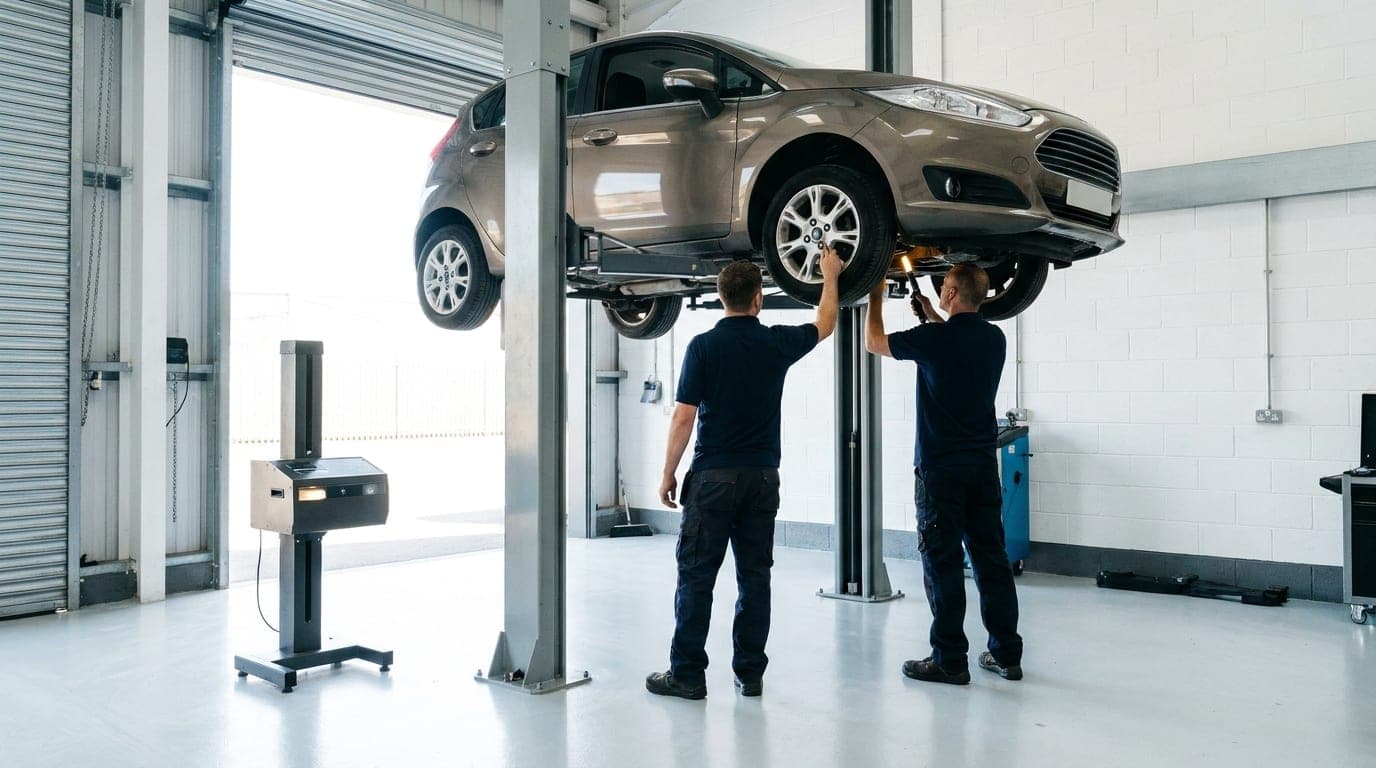
Test station VTS-PENDING
MOT testing in Hambridge
Class 4 and Class 7 MOT tests at our DVSA-approved test station. £45 for a car, about 45 minutes, and a free retest within ten working days if it fails.
What it costs
- Class 4 MOT (cars, up to 8 seats)DVSA maximum is £54.85
- £45.00
- Class 7 MOT (vans 3,000–3,500kg)DVSA maximum is £58.60
- £54.00
- MOT with a full service booked
- £35.00
- Retest within 10 working days
- Free
Book an MOT
Two ways to book
Booking the MOT alongside a full service takes £10 off the test and puts both jobs in one visit.
MOT only
£45
Class 4
- Full DVSA inspection, about 45 minutes
- Free retest within 10 working days
- Results uploaded to the DVSA database same day
- Waiting area with a view of the ramp
MOT with a full service
£35
MOT, when booked with a full service
- £10 off the MOT price
- Full service — oil, filters, 30-point check
- Both done in one visit, same day
- Written report with photographs
All prices include VAT. Class 7 vans 3,000–3,500kg are £54.
Free MOT check
Check when your MOT is due
You can have the test done up to one calendar month minus a day before it expires and keep the same renewal date. There is no advantage in leaving it late.
Enter your registration below to see the exact expiry date and any advisories from the last test.
MOT reminder
We will remind you when it is due
Driving without a valid MOT risks a fine of up to £1,000 and can invalidate your insurance. Most people who get caught out simply forgot the date.
- One email, a month before your MOT expires
- That is the earliest you can test and keep your renewal date
- Add a mobile number and we will text you as well
- No marketing, and unsubscribe from any reminder
What is tested
The five areas we check
Every test station works to the same DVSA inspection manual, so the standard is identical wherever you go.
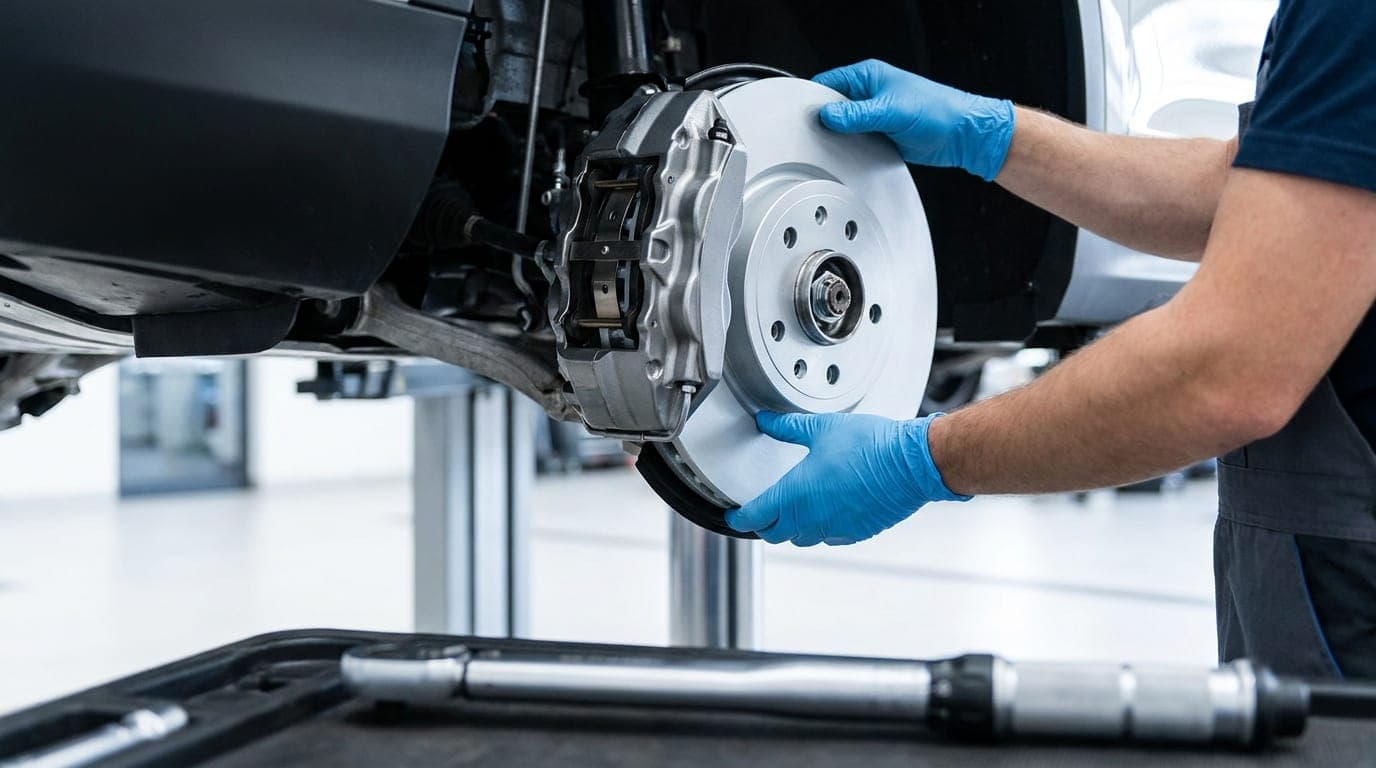
Brakes
- Pad and disc condition and thickness
- Efficiency measured on the roller brake tester
- Pipes and hoses checked for corrosion, chafing and leaks
- Parking brake performance and cable condition
- ABS warning system operation
Steering and suspension
- Play in the steering rack, column and joints
- Shock absorbers checked for leaks and damping
- Springs inspected for corrosion and fractures
- Ball joints, bushes and track rod ends
- Power steering pipes and fluid level
Tyres and wheels
- Tread depth at 1.6mm minimum across the central three quarters
- Sidewall cuts, bulges, cords and perishing
- Correct load and speed rating for the vehicle
- Wheel condition, security and bearing play
- Spare is not tested unless it is fitted
Lights and visibility
- Headlamp aim measured on a beam setter
- All lamps, indicators, reflectors and the hazard function
- Windscreen damage within the swept area (10mm zone A, 40mm elsewhere)
- Wiper blades and washer function
- Mirrors, horn and the driver's view of the road
Structure, emissions and interior
- Corrosion within 30cm of a mounting point for a structural component
- Exhaust security, leaks and noise
- Emissions measured against the plate values for your engine
- Seat belts, mountings and pretensioner warning lights
- Doors, catches, seats and the registration plate itself
What is not included
The engine, clutch, gearbox, oil, coolant and cambelt are not part of an MOT. A car can pass its test and still be due significant work, which is why servicing is a separate job.
What a service coversResults
Understanding your result
- Advisory
- Not a fault. Something is wearing out but has not crossed the threshold. You still pass. This is the most useful line on the certificate and the one nobody reads.
- Minor
- A defect that is recorded but does not fail the test. Fix it when convenient — it will usually be a major by next year.
- Major
- A fail. The car must be repaired and retested before it can legally be driven, other than to a pre-booked test or a garage.
- Dangerous
- A fail, and the car is unroadworthy. It cannot leave the site under its own power. We will tell you this to your face rather than by text.
Questions
Common MOT questions
When is my MOT actually due?
Exactly one year after the expiry date on your last certificate, not one year after the test. You can test up to one calendar month minus a day before it expires and keep the same anniversary date, which is why testing early costs you nothing.
Can I drive without a valid MOT?
Only to a pre-booked test, or to a garage for repairs that have been arranged. Anything else risks a fine of up to £1,000, and your insurance is very likely to be treated as invalid. If the car failed on a dangerous defect you must not drive it at all, including to another garage.
What is the difference between a minor, a major and a dangerous fault?
A minor is recorded but you still pass. A major is a fail and must be repaired. A dangerous is a fail and means the car is unroadworthy — it cannot legally leave the site under its own power until it is fixed. Advisories are not faults at all; they are the tester flagging something that will become one.
What happens if it fails?
We tell you exactly what failed and what it costs to put right, and you decide. If you have the work done here and the car is retested within ten working days, the retest is free. You are equally free to take it elsewhere — the free retest still stands if it comes back inside that window.
Does a new car need an MOT?
Not until the third anniversary of its first registration. After that it is annual. Historic vehicles built more than 40 years ago are usually exempt, though you can still have one tested voluntarily and many owners do.
Where does your reg checker get its data?
Two government sources. The DVLA Vehicle Enquiry Service supplies tax status and the current MOT expiry date. The DVSA MOT History API supplies the model and every test recorded since 2005, including advisories. We do not add anything to it and we do not store your registration.